Trying to Decide if You Should Hire a Web Designer?
If you’re a business owner trying to decide whether you should build your own website or hire a professional web designer, you’re not alone.
A lot of business owners start out thinking: “I’ll just build it myself and save money.”
And honestly, sometimes that is the right decision.
If you’re starting a brand-new business, testing an idea, or working with a limited budget, building your own website can absolutely help you get online and establish a digital presence.
But there’s also a point where many business owners realize: Having a website and having a website that actually helps grow your business are two very different things.
Launching a website does not automatically mean:
- people will find it
- Google will rank it
- or customers will contact you
A website works best when there’s strategy behind it.
That strategy affects:
- professionalism
- first impressions
- SEO
- trust
- conversions
- and whether your website actually helps your business grow long-term.
Why So Many Business Owners Start Building Their Own Website
A lot of business owners try building their own website because they don’t think it will be that difficult.
I actually think it’s a good thing for business owners to know basic things like:
- how to log in
- how to change office hours
- how to update images
- how to make simple content edits
Having this knowledge keeps business owners in control of how their business is presented online.
There are so many DIY website builders now that try to make web design easy for anyone:
- Wix
- Squarespace
- GoDaddy’s Website Builder
- Shopify
- AI website builders
These platforms market themselves as easy-to-use solutions for small businesses.
Sometimes they work great for getting started.
But eventually many business owners realize: building a website is not just about placing text and pictures onto a page.
Real digital marketing creates a website that:
- clearly explains what your business does
- builds trust quickly
- guides people toward action
- and helps search engines understand your content.
That’s where strategy starts becoming important.
When a DIY Website Might Make Sense
There are definitely situations where a DIY website makes sense.
For example:
- startups with a small budget
- businesses validating an idea
- side businesses
- business owners who are tech-savvy
- companies that only need a simple online presence initially
Honestly, I respect business owners who are willing to give it a try.
Sometimes starting small is exactly the right move.
But it’s important to understand the tradeoff.
Many DIY platforms simplify the process by limiting flexibility.
That can help reduce the initial overwhelm, but later on business owners sometimes realize:
- they can’t create the layout they envisioned
- SEO settings are limited
- mobile layouts become frustrating
- customization options are restricted
- or the website doesn’t reflects the professionalism of their business.
That’s often the point where businesses begin considering a more strategic website approach.
The Biggest Mistakes I See on DIY Websites
One of the biggest misconceptions about websites is: “If I launch a website, customers will automatically find me.”
Unfortunately, that’s usually not how it works.
In fact, a study from Ahrefs shows that 96.55% of online content gets no traffic from Google.
So, just launching a website does not mean people will automatically find you online.
Here are some of the most common issues I see on DIY websites.
Misuse of Heading Tags
One of the biggest issues I see on business websites has to do with heading tags.
Many business owners end up using headings for design instead of site structure.
Heading tags help create the structure of a webpage for both users and Google.
When headings are are not used the right way, pages become harder for search engines to understand, which can affect SEO performance and user experience.
A webpage should have a clear flow of information and headings should be structured similar to that of a book outline.
Weak Calls-to-Action
A lot of websites never clearly guide people toward the next step
Visitors should not have to guess:
- how to contact you
- how to request a quote
- how to book
- or what to do next.
One of the biggest differences between websites that convert and websites that don’t are clear calls-to-action.
The strongest websites are usually very clear about:
- who they help
- what they do
- and what action visitors should take next.
No Internal Linking
Many DIY websites have pages that are completely isolated from each other.
Internal linking helps:
- users continue exploring your website
- search engines understand related topics
- improve website structure
- and support SEO growth over time.
For example, if someone is reading about web design strategy, it makes sense to guide them toward related topics like:
- SEO
- website redesigns
- or improving Google rankings.
Without those connections, web pages appear disconnected don’t work together like they should.
Unclear Messaging
This is one of the biggest problems affecting both conversions and SEO.
Many business websites never clearly explain:
- what they do
- who they help
- where they serve
- or why someone should choose them.
That confusion hurts trust immediately.
Which brings us to something I think matters tremendously in web design.
The 3-Second Rule in Website Design
When someone lands on your website, you have about 3 seconds to help them understand:
- what your business does
- who you help
- your service area
- and what they should do next.
If a visitor can’t tell in a few seconds that you are professional and can help them with what they are looking for, they will leave.
Clear messaging above the fold helps:
- people trust your business faster
- improve conversions
- and helps search engines understand your website more clearly.
The success of your website depends on making your business understandable at a quick glance.
The best-performing websites are usually incredibly clear.
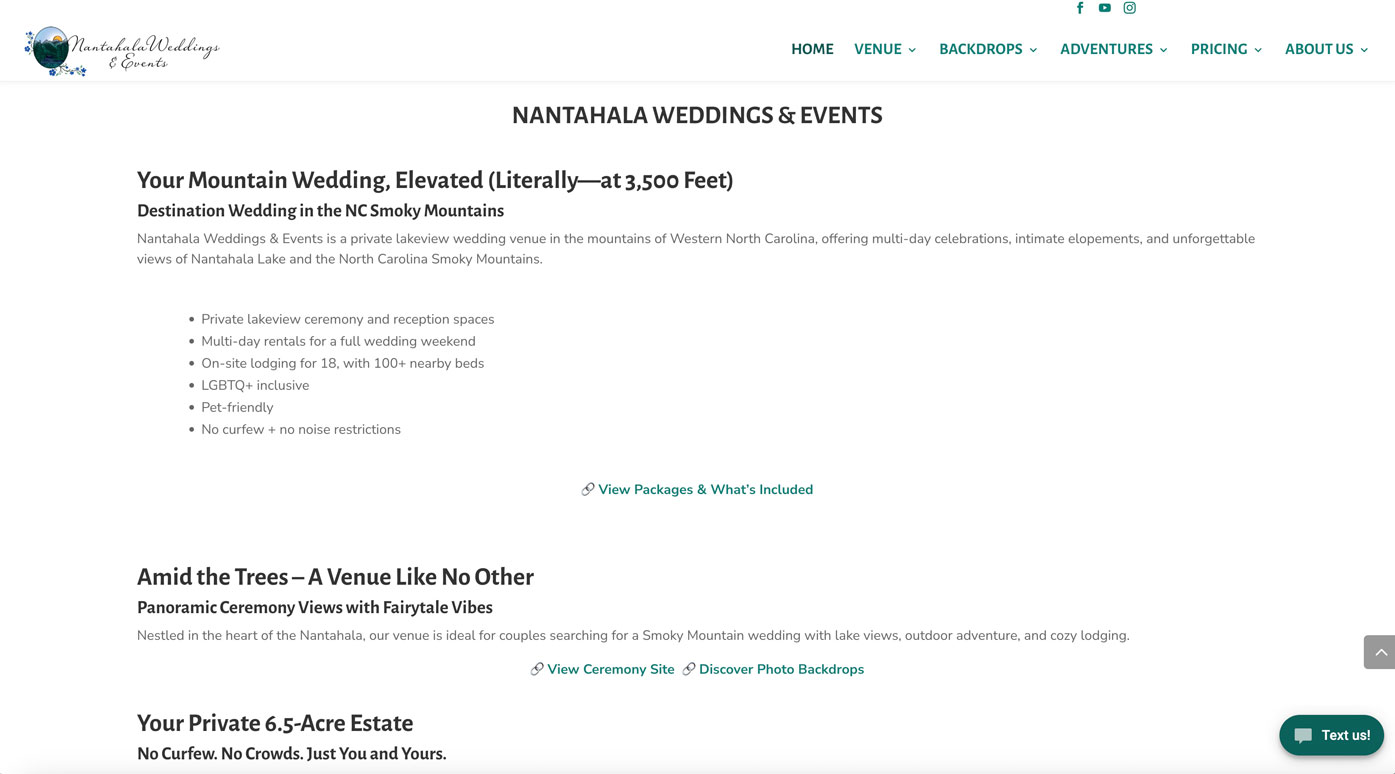
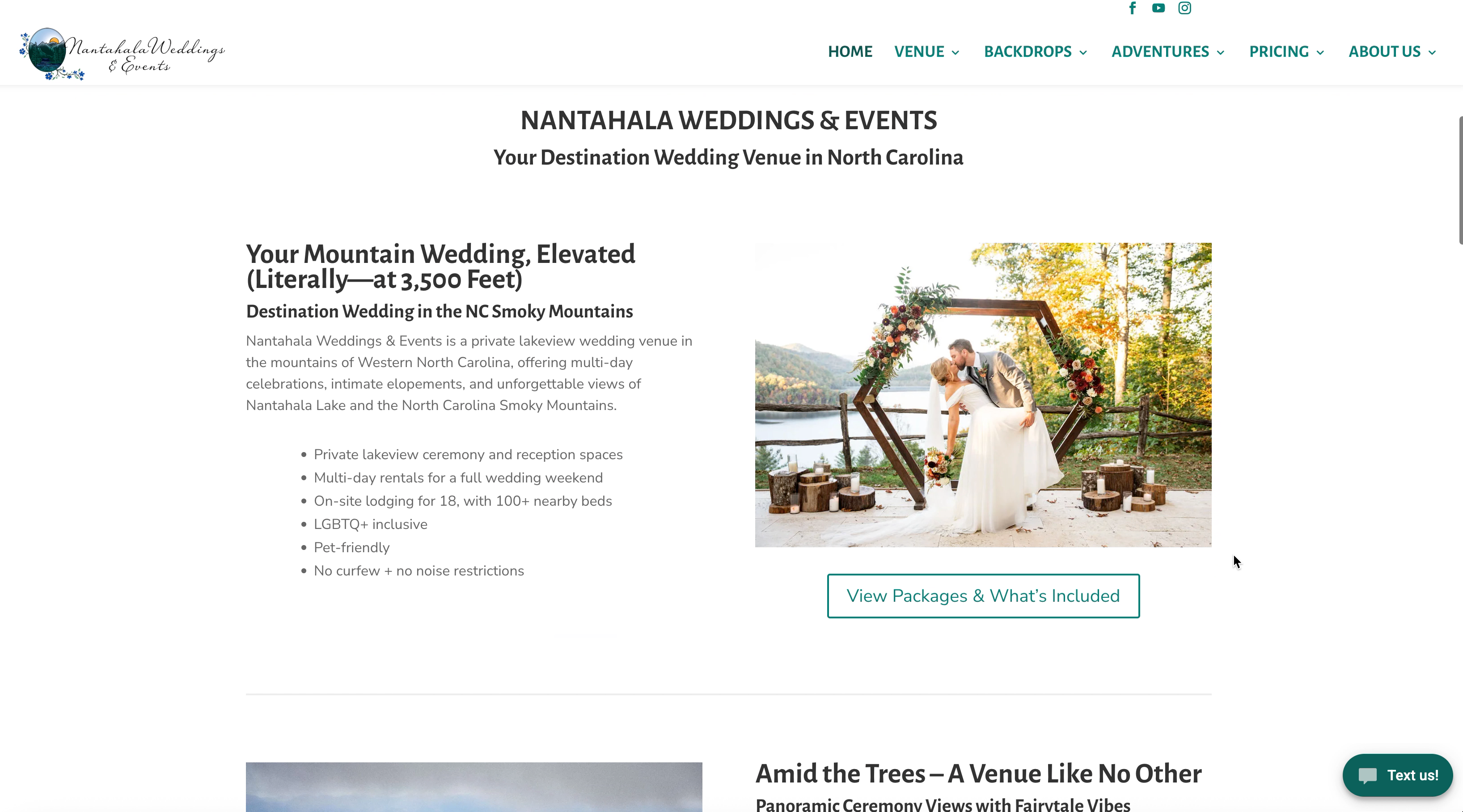
Here’s a before and after example of homepage screenshots from a VIP Day client project. How I helped Nantahala Weddings & Events was to transform their homepage from a list of information to an eye-catching design aimed at keeping attention and drawing attention to the CTAs.
What Professional Web Design Actually Helps With
Professional web design is about much more than aesthetics.
A strategic website helps support business growth.
Strategy
A website should be built intentionally around:
- your ideal customer
- your services
- your business goals
- and search visibility.
One of the biggest mistakes business owners make is assuming websites are simply digital brochures.
A website should function more like a sales tool for your business.
SEO Structure
SEO starts with structure.
That includes:
- page organization
- headings
- internal linking
- content flow
- mobile usability
- page speed
- and clear messaging.
Simply launching a website does not automatically mean it will rank on Google.
A properly structured website helps search engines better understand:
- your business
- your services
- and your content.
You can learn more about that in my article on what actually helps businesses rank higher on Google.
Conversions
A website should help guide visitors toward action.
That may include:
- requesting a quote
- scheduling an appointment
- calling your business
- or filling out a contact form.
Good design supports conversions by reducing confusion.
First Impressions
Your website is often one of the first impressions people have of your business.
An outdated or confusing website can unintentionally create doubt around your brand.
A professional website helps communicate:
- trust
- credibility
- professionalism
- and stability.
First impressions matter tremendously.
Trust
Trust matters for both customers and Google.
Things that improve trust include:
- clear contact information
- strong messaging
- testimonials
- original photos
- professional branding
- and useful content.
Google’s E-E-A-T framework also emphasizes:
- experience
- expertise
- authority
- and trustworthiness.
And those signals are becoming increasingly important online.
Why Just Launching a Website Doesn’t Automatically Bring Traffic
This is something many business owners don’t realize initially.
Launching a website does not automatically mean:
- you’ll rank on Google
- traffic will come in
- or leads will start pouring in.
Google typically wants to see signs that a website is:
- active
- maintained
- updated
- and genuinely helpful.
That’s why ongoing optimization matters.
Regular updates on your website look like:
- publishing blogs
- improving service pages
- updating images
- refining messaging
- adding FAQs
- or expanding content over time.
A successful website is usually not a one-time project.
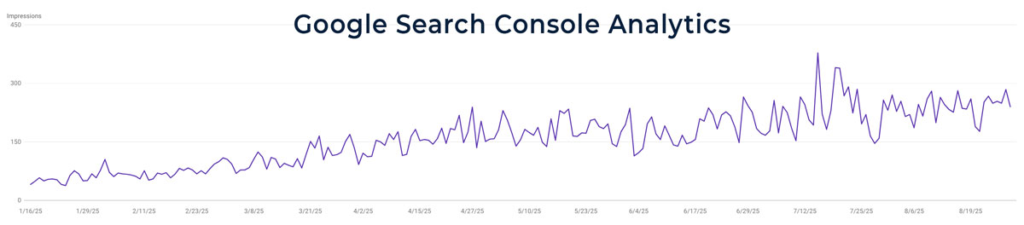
Here’s an example of a client I post regular blogs for. We have found that posting new content on his site, just once a month, has gone a long way in increasing his organic visibility.
Consistent updates and optimization help improve search visibility over time.
WordPress vs DIY Website Builders
Many business owners eventually compare platforms like:
- WordPress
- Wix
- Squarespace
- Shopify
- and GoDaddy’s Website Builder.
DIY builders can absolutely work for simpler websites.
But one thing I personally notice is that some platforms prove to be frustrating for business owners, even if they are marketed as a platform where “anyone can build a website”.
For example, when I build websites in WordPress, I usually only need to make minor adjustments when optimizing the mobile version of the site design.
However, on some DIY platforms, it can feel like rebuilding the mobile version almost from scratch because elements on the page shift so much.
Business owners who get frustrated with DIY builders come to me thinking there’s a problem with them, because they can’t figure out the tools.
I’m here to tell you, it’s not you. The tools aren’t always as easy-to-use as one might expect. Each platform has its quirks and technology limitations.
Personally, I prefer WordPress for its:
- flexibility
- scalability
- SEO control
- and customization.
At the same time, WordPress can initially feel overwhelming to business owners.
For that reason, before building a website for a client, I discuss their comfort level with different platforms, how they plan to maintain their site (themselves or hire me), and we decide together the best option for them.
How to Know If You’re Ready to Hire a Web Designer
You may be ready to hire a professional if:
- your business is growing
- your website no longer reflects your professionalism
- you feel overwhelmed trying to manage everything yourself
- your website is not generating leads
- your growth online has stalled
- or you want a clearer SEO strategy moving forward.
I’ve also worked with business owners who started building their own site, got halfway through, then stopped when they felt completely overwhelmed by the process.
If you have a website you’ve been sitting on half-done for months, it’s time to consider hiring a professional. In the time you’re waiting to launch your website, you could be loosing customers to competitors who are already online.
Some business owners hire me to build their websites from scratch or redesign an outdated site. Others hire me to finish what they already started.
I’m here to help you launch an incredible website that works for you online.
What a Professional Website Investment Typically Looks Like
Website pricing varies based on:
- number of pages
- SEO optimization
- image optimization
- blog migration
- galleries
- functionality
- and customization.
For example:
- a foundational website may start around $2,500
- larger or more advanced projects may increase based on scope and content volume.
Some businesses also choose to build their website out in stages.
Building in stages might look like:
- starting with a smaller foundational website
- then adding optimized service pages later
- building blog content over time
- or continuing SEO improvements gradually.
That approach can work extremely well for growing businesses.
A Website Should Grow With Your Business
One of the most important things business owners should understand is this:
A website is rarely a “one and done” project if your goal is long-term visibility online.
Google likes to see that websites are updated and maintained.
That means:
- updating content
- adding information
- improving pages
- publishing blogs
- refreshing images
- and continuing to build authority over time.
Your website should grow alongside your business.
Because the businesses that continue improving their websites are often the businesses that continue improving their visibility online too.
Final Thoughts
There is absolutely nothing wrong with starting with a DIY website.
Sometimes it’s the perfect starting point.
But if your goal is to create a website that:
- builds trust
- supports SEO
- generates leads
- improves professionalism
- and helps grow your business long-term
That’s where an investment in a digital marketing strategy for your website matters.
Because the most effective websites are not just designed to exist online.
They’re designed to help businesses grow.
Wondering what you’re next step should be? Book a free 15 minute call with me. We’ll discuss what you need for a successful website presence.