
How Search Intent Helps You Attract More Serious Buyers (Not Just Website Traffic)
minute read
READ ON

VIDEO: What Is Search Intent and How Does It Help Me Attract Serious Buyers
KEY TAKEAWAYS
- More traffic doesn’t mean more sales. Search intent helps you attract visitors who are actually researching, comparing, and preparing to buy.
- Google ranks pages based on intent, not just keywords.
- Not every website visitor is ready to buy. That’s normal. Intent-driven content allows you to support people at different stages of the buyers journey so you can build trust, demonstrate an authority, and close sales.
- Search intent optimization improves Google rankings and user experience.
- Optimizing for search intent creates a strong, long-term SEO strategy meant to bring in serious buyers.
The Goal Isn’t More Traffic, it’s Better Traffic
Many businesses invest time and money into SEO hoping for one thing: more traffic.
But traffic alone doesn’t grow a business. Serious buyers do.
Search intent is what separates casual browsers from people who are actively researching, comparing, and getting ready to buy. Understanding this helps your website attract visitors who are way more likely to take action when visiting your website.
What Is Search Intent?
Search intent is the reason behind a search. It is the “why” for which someone is searching.
Google’s job is to match each search with the most helpful result for that moment, not the most keyword-heavy page.
If your web page doesn’t match a user’s intent, if it doesn’t answer the questions a person has, they will leave. If Google sees that people leave quickly from your website after it’s directed traffic to it, it’s a sign to the search engine that users aren’t getting the information they need from your website. That’s not good and it could affect whether Google continues to display your website in those search results.
The 4 Main Types of Search Intent (and Buyer Readiness)
There are four main types of search intent:
- Informational: the searcher is looking for information, they are learning
- Navigational: the searcher is looking for specific content on a specific website
- Commercial: the searcher is comparing options or products and narrowing down options
- Transactional: the searcher is ready to make a purchase
Google is now focused on matching both topically relevant content and intent relevant content with searches.
1. Informational Intent - Early Stage
These searchers are learning, not buying yet.
Examples:
- “What is bookkeeping?”
- “How does bookkeeping work?”
- “Benefits of working with a bookkeeper”
These visitors aren’t ready to buy, but they will be if you earn their trust early.
Try it Out:
Go to Google and search “what is fast food”
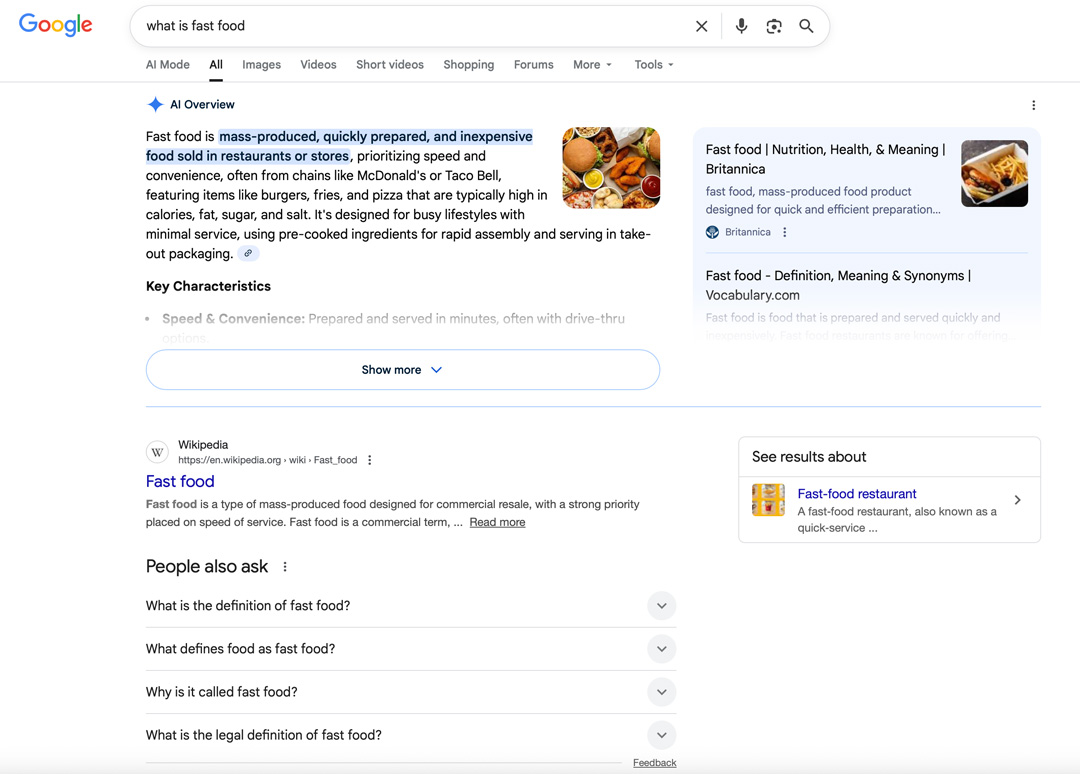
What you see: This is an informational search, so you will see an AI Overview at the top, some resource-related search results, and also a “People also ask” section that highlights Q&As for other learning-related searches people have made.
2. Navigational Intent - Brand Aware
These users already know who they’re looking for.
Examples:
- Business names
- Brand searches
- “Login” or “Contact”
This reinforces credibility and trust.
Try it Out:
Go to Google and search “McDonald’s menu”
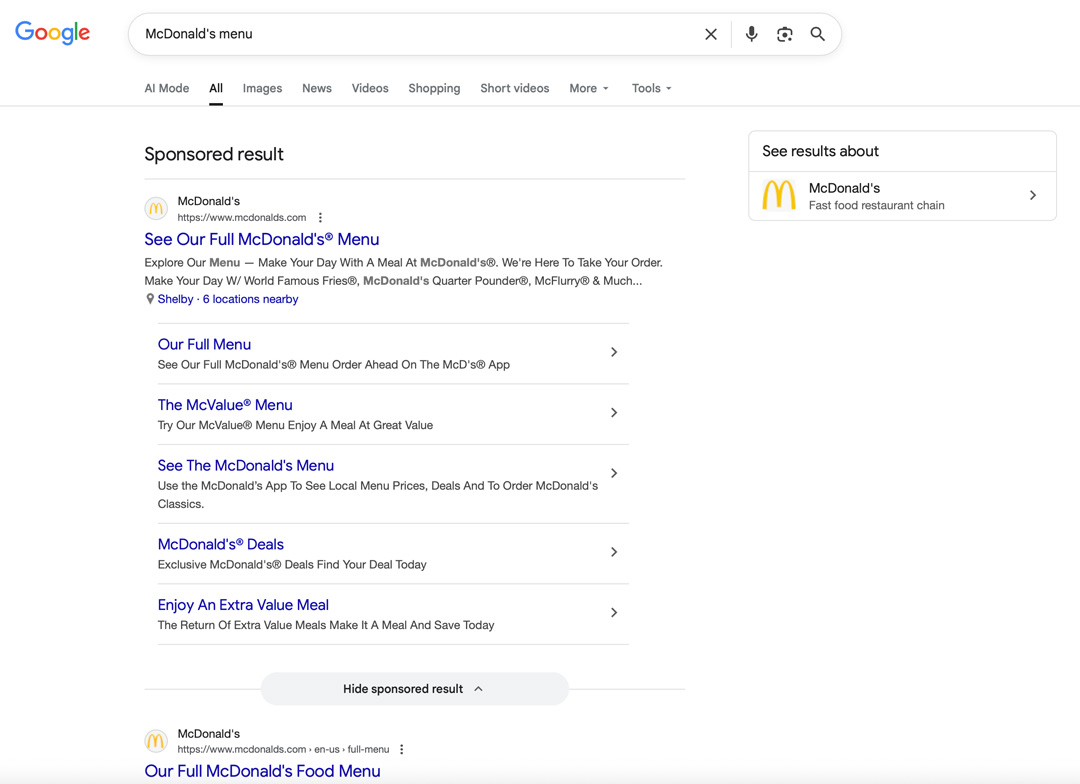
What you see: This is a navigational search. When someone searches for this, they are using Google to find a specific page on a brand’s website. In this search result, you actually see a Sponsored Result (because McDonald’s wants to make sure they show up in this result) of the different menu and deals pages. The first search result under this is also McDonald’s menu. If you continue to scroll down the page, you can even see images of the menu.
3. Commercial Investigation - High-Value Intent
This is where serious buyers start to appear.
Examples:
- “Best accounting company for small business”
- “accountant vs bookkeeper”
- “accounting services pricing”
These users are comparing options and narrowing decisions.
Try it Out:
Go to Google and search “McDonald’s vs. Burger King”
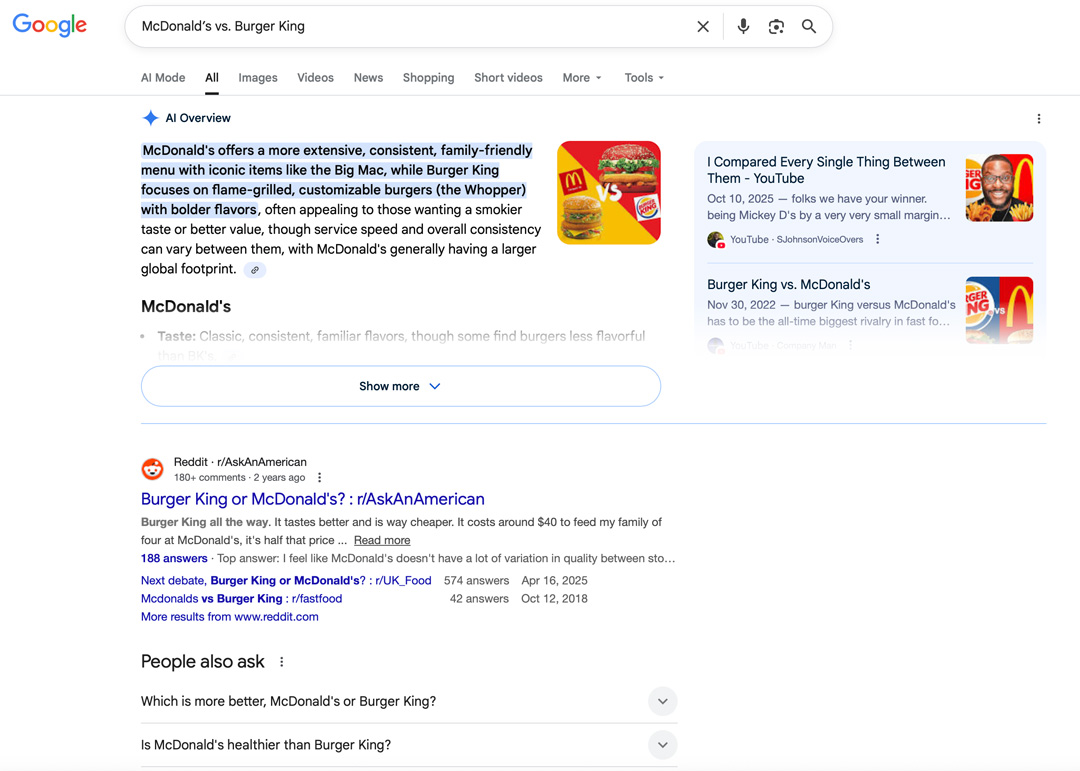
What you see: This is a commercial type of search. At the top you can see an AI Overview that’s summarizing helpful content it has found online to compare the two brands. Under this, the search results show a Reddit thread applicable to this comparison and then a “People also ask” section to help the searcher get answers to other related questions commonly asked when comparing these brands.
4. Transactional Intent - Ready to Act
These searches signal immediate action.
Examples:
- “Hire accountant near me”
- “Book an accountant for tax return”
- “Accountant services [city]”
This is where conversions happen, but only if trust has already been built.
Try it Out:
Go to Google and search “McDonald’s Charlotte NC”
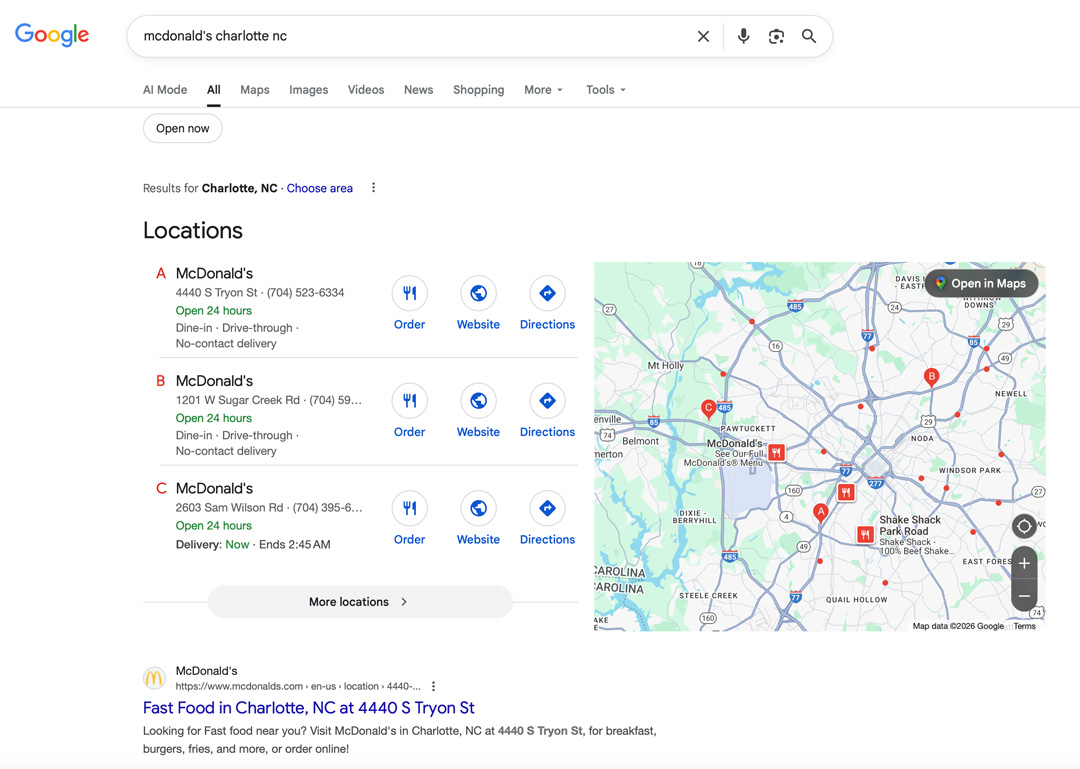
What you see: In this transactional search, you can see a big difference in the search result page. There are no AI Overviews or related questions. Instead you see a map pack with a list of McDonald’s locations and below that a search result for a McDonald’s location that’s been optimized for people searching for a location in their area.
Why Search Intent Matters If You Want More Serious Buyers
From the examples above, you should be able to see that the intent for which you optimize your website pages can have you showing up in search results for researchers, people close to buying, and people ready to buy.
Now, because not everyone is ready to buy the first time they visit your website, it’s important to have content that serves the different stages of intent. By doing this, you’re able to build brand recognition during someone’s early stages of investigation, assist them with comparison, and also be there when they are ready to buy.
Google is optimizing their search results for search intent for a better user experience. So, when your content aligns with the appropriate search intent, you will also be delivering a better experience to people online and should see the following results:
- Visitors stay longer
- Engagement improves
- Bounce rates drop
- Trust builds faster
- Conversions increase
This happens because you are serving your ideal customer well with the right content that’s appropriate at the right stage in the buyers journey.
Insider Tip: Optimizing for search intent helps you draw the right people to your website who are more likely to buy from you.
How Search Intent Filters Out Tire-Kickers
Google is delivering a different search result experience based on the search intent. This is done to improve search results and better serve user online.
When your website only targets high-level keywords without intent:
- You attract curiosity, but not commitment
- Visitors leave quickly
- Google sees low engagement
When your site includes content for multiple intent levels:
- You educate early
- Support comparison
- Capture ready-to-buy users
- Bring people back when they’re prepared to act
Tip: Many serious buyers don’t convert the first time they visit your website. It can take several visits before someone actually makes a purchase. For this reason, supporting people through multiple stages of the buyers journey will personalize their user experience, build trust with your brand from early on, and increase your chances of conversions.
5 Practical Ways to Use Search Intent to Attract Better Leads
1. Create Content for Buyers Before They’re Ready
Educational blogs and FAQs answer questions that buyers Google before contacting anyone.
This positions you as a trusted expert early.
2. Match Page Type to Buyer Mindset
Blogs educate.
Service pages convert.
Comparison pages persuade.
Using the wrong page type confuses both Google and visitors.
3. Use Google Results to Understand Intent
Search your target keyword and look at:
- The type of pages ranking
- How they’re written
- What questions they answer
Google is already telling you what intent it sees.
4. Write Headings That Signal Readiness
Your headings should reflect where the buyer is mentally.
Examples:
- “What is a bookkeeper?” = learning
- “Is a bookkeeper Worth It for Small Businesses?” = evaluating
- “Bookkeeper Services in [City]” = ready to hire
Clear signals attract qualified traffic.
5. Don’t Force Sales Too Early
Trying to sell too soon repels serious buyers.
Instead:
- Educate first
- Build trust
- Offer clarity
- Invite action naturally
Search Intent Attracts Buyers Who Are Ready
SEO isn’t about ranking for everything, instead it’s about ranking for the right reasons. By optimizing for search intent, you will be keeping up with newer search engine optimization practices instead of relying on older strategies. This will secure the longevity of your SEO Strategy.
When your website understands search intent:
- Google rewards your relevance
- Visitors feel understood
- Leads are more qualified
- Conversions improve naturally
If you want more serious buyers instead of just more clicks, search intent needs to be part of your SEO strategy.
Ready for the Next Step?
Wondering how to get started with an SEO Strategy or how to implement search intent on your website so you attract more serious customers? Book a 15 minute discovery call with me and let’s talk!
Or, download my free guide SEO Simplified to jumpstart you on your SEO journey.
optimize your website for
search engines
Download my SEO Checklist if you:
- Have a website and want search engines to display your site in people's search results
- Are building a website and want to know how to get search engines to discover your new site
- Are a small business owner who wants their website to work for them to bring in potential leads